
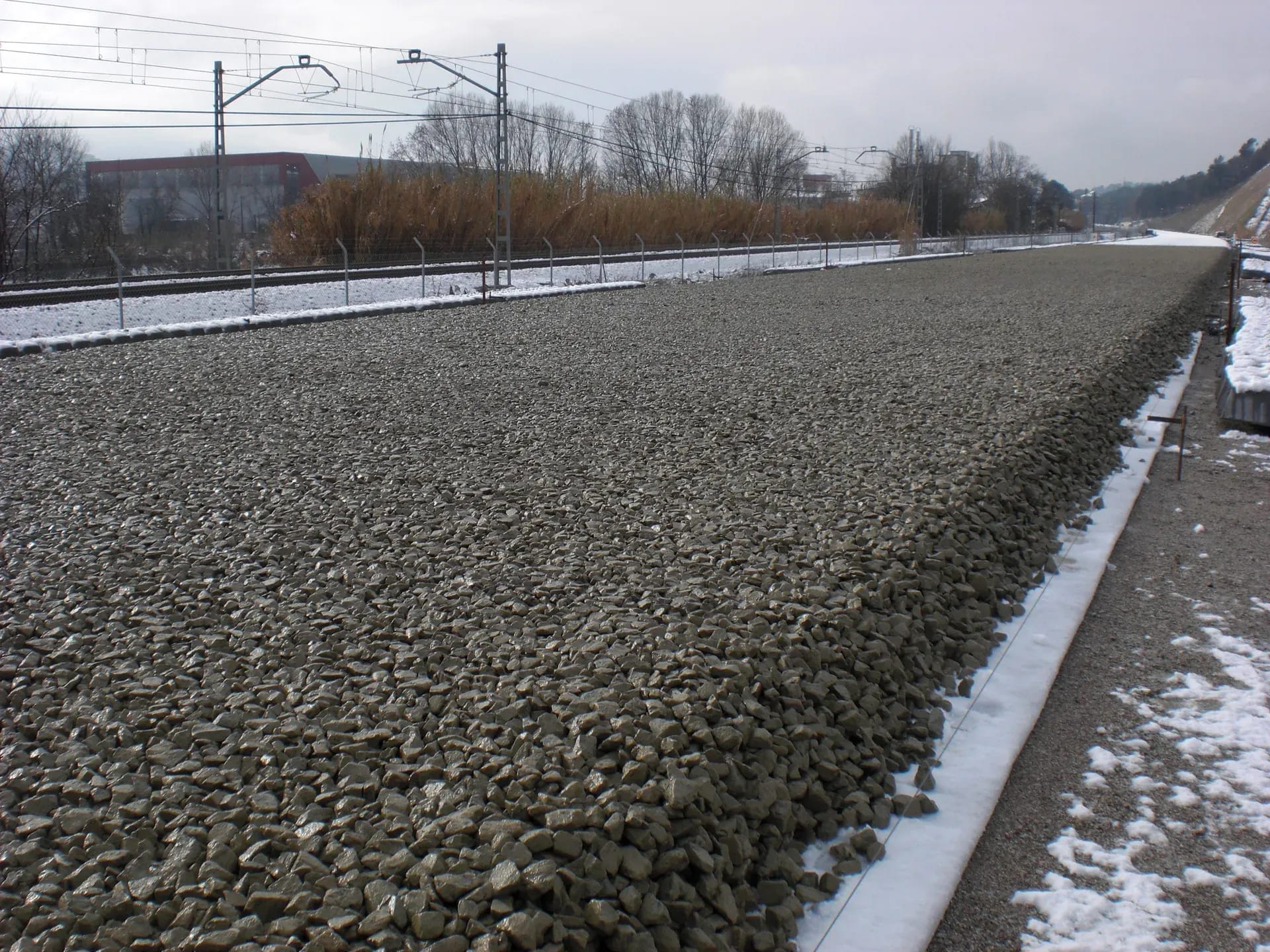
Under Ballast Mats
Under Ballast Mats (UBM) sit beneath the ballast bed to control vibration and protect the track structure. Working on the mass-spring principle, they're tuned to your track and train design, giving heavy haul, mainline and transit networks a durable, low-maintenance way to extend track life.
What are Under Ballast Mats products and how do they work?
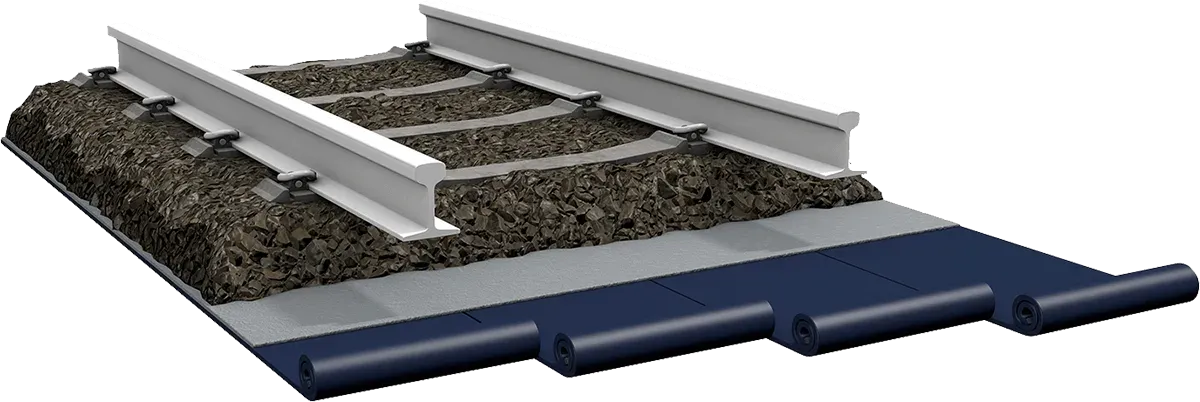
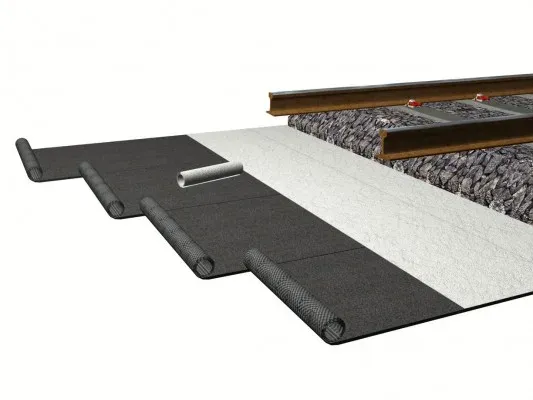
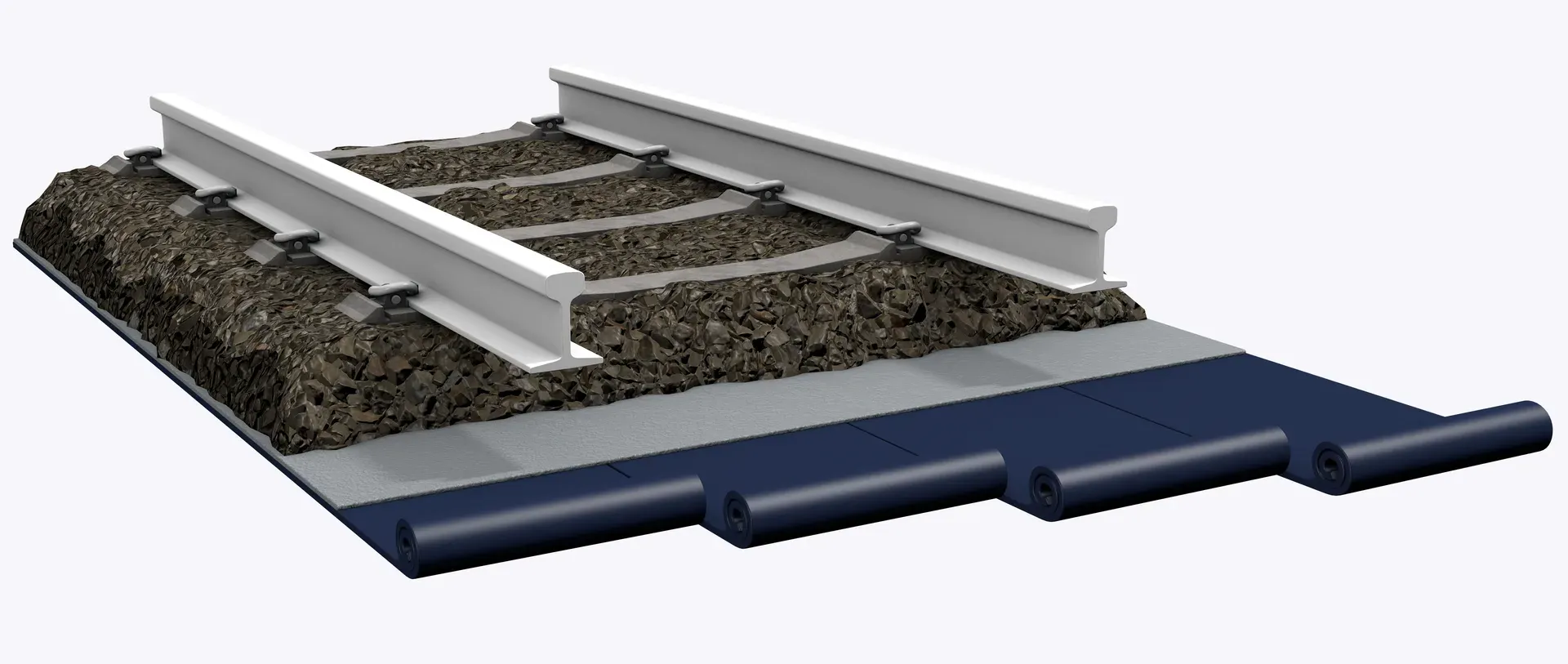
Under Ballast Mats are continuous resilient mats laid beneath the ballast bed on ballasted track. They work on the mass-spring principle: the ballasted track acts as the mass, and the mat acts as the spring beneath it. The mat's elastic properties are set by track and train design, material, thickness and number of layers, so performance can be tuned to the project. The mats are made of high-quality resin bonded rubbers. Supplied in rolls for single or double-layer installation, with no closing joints between layers, UBMs achieve vibration attenuation up to 25 dBv while staying fully water permeable in both directions.
Speak to our rail expertsProduct benefits
Simple, rapid installation
Supplied in rolls with no closing joints between layers, saving time and labour on site.
Tuneable vibration control
Available in a wide range of stiffnesses, and can be modified to meet particular requiprement and can Achieve attenuation up to 25 dBv with a resonance frequency as low as 14 Hz, tuned to your track.
Built to last
Stay resistant to atmospheric conditions, chemical exposure and mechanical fatigue, with minimal upkeep.
Overview
Under Ballast Mats sit beneath the ballast bed, working on the mass-spring principle to protect the track structure and control vibration. Supplied in rolls with no closing joints, they're tuned to your track and train design and suit heavy haul, mainline and transit routes alike.
Downloads
Related products
Below are other Pandrol products and equipment that can be integrated with this product. These complementary items can be used alongside this product, or are required for use with this product, or enhance the use of this product.

Discuss your Fastening Systems project with our team.
Did you know?
There are more Pandrol clips in service than there are people in Europe. Over three-times the amount to be precise. We have 3 billion clips in use and Europe has a population of around 750 million.