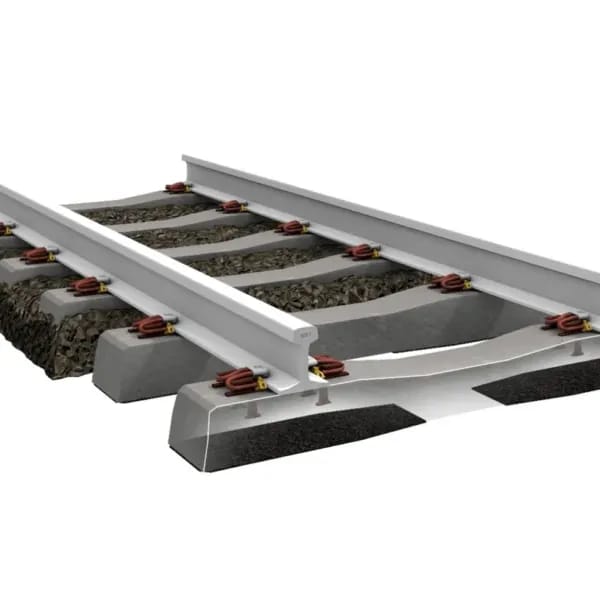
As rail networks expand into towns and cities, track runs closer than ever to homes, offices, hospitals and public spaces. Every train that passes generates ground-borne vibration that travels beyond the track itself. In dense urban environments, that ground-borne vibration can reach building foundations and disrupt the people living and working nearby.
Left unmanaged, this vibration also accelerates rail corrugation, increasing noise and shortening the working life of the track. It also raises the risk of structural damage to nearby buildings and infrastructure, particularly in cities built on ageing foundations or where new lines run beneath sensitive sites.
Implementing rail vibration control measures to meet strict insertion loss and noise standards is now a baseline expectation for any urban rail project. At the same time, operators are under growing pressure to hit carbon reduction targets, meaning the materials used to control noise and vibration need to perform sustainably.