
Under Sleeper Pads
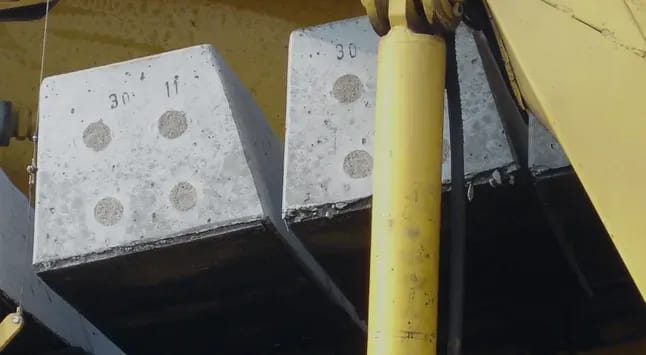
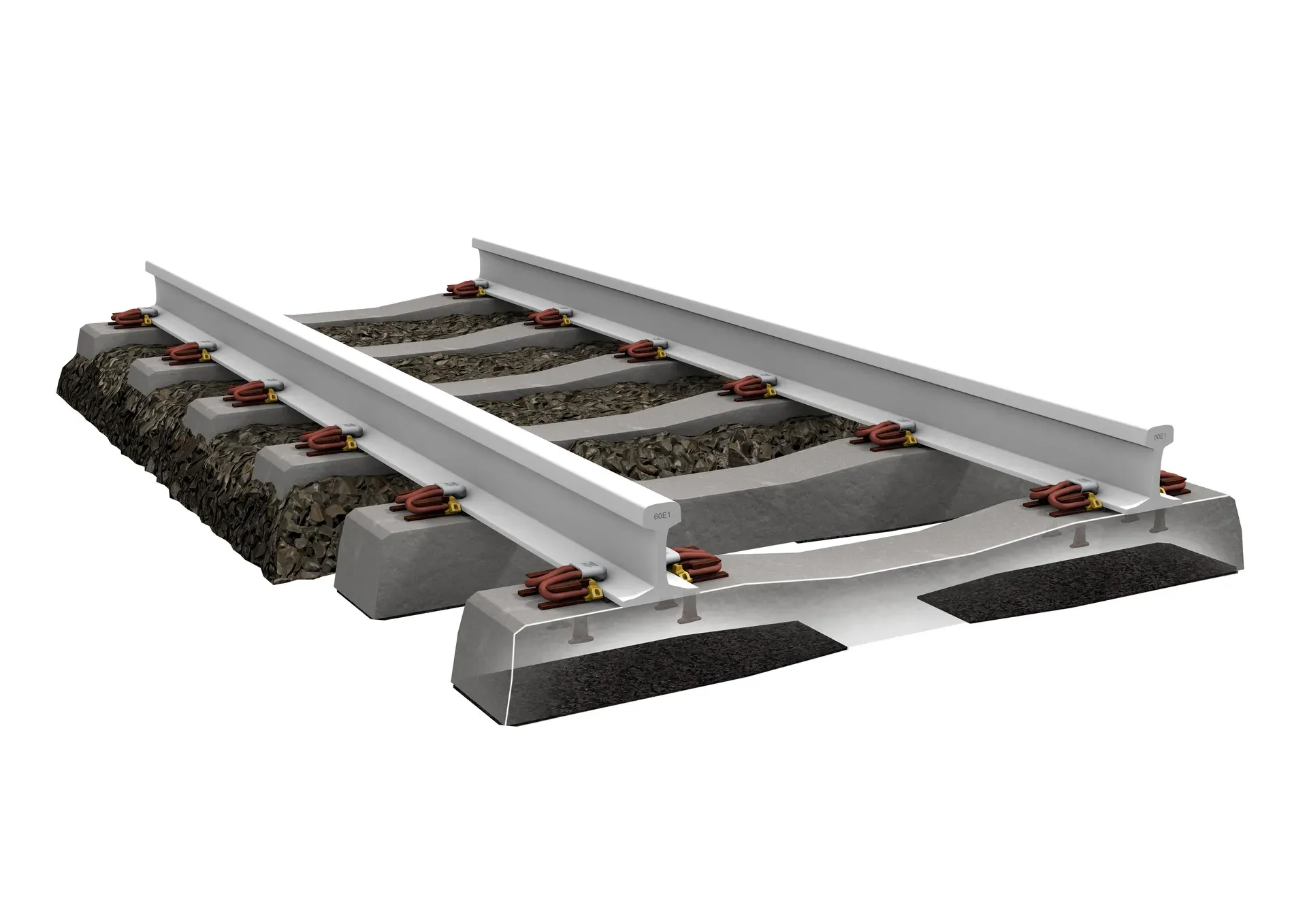
Under Sleeper Pads (USP) fit beneath the sleeper to reduce track maintenance, improve track quality and control vibration on ballasted track. Bonded during sleeper production or glued to existing sleepers, each pad is tailored to the sleeper profile for a proven, low-maintenance way to extend asset life.
What are Under Sleeper Pads products and how do they work?
Under Sleeper Pad technology relies on resin-bonded rubber pads fitted to the underside of the sleeper on ballasted track. They're bonded to fresh concrete during sleeper production using Pandrol's patented MFF (Micro-Filament Fastening) technology, or glued onto sleepers already in service. Once installed, a USP spreads axle load more evenly across the sleeper, reducing internal stress, and increases the contact area between sleeper and ballast for a more homogeneous track quality. Stiffness is tailored to each project, so you can hit a specific vibration attenuation target without compromising track quality. Suitable for concrete, steel and timber sleepers of any geometry.
Speak to our rail expertsProduct benefits
Reduced maintenance
Extend tamping (LLT) intervals by a minimum factor of two, cutting whole-life maintenance costs.
Lower ballast costs
Reduce ballast layer thickness by up to 10cm while normalising track stiffness across the formation.
Built-in sustainability
Made from over 90% recycled rubber and fully recyclable, backed by independently verified EPD data.
Overview
Under Sleeper Pads fit beneath the sleeper on ballasted track, bonded to fresh concrete during production using Pandrol's MFF® technology or glued to sleepers already in service. Each pad distributes axle load more evenly and increases contact with the ballast, extending maintenance intervals and reducing whole-life cost.
Downloads

Related products
Below are other Pandrol products and equipment that can be integrated with this product. These complementary items can be used alongside this product, or are required for use with this product, or enhance the use of this product.
Discuss your Fastening Systems project with our team.
Did you know?
There are more Pandrol clips in service than there are people in Europe. Over three-times the amount to be precise. We have 3 billion clips in use and Europe has a population of around 750 million.