
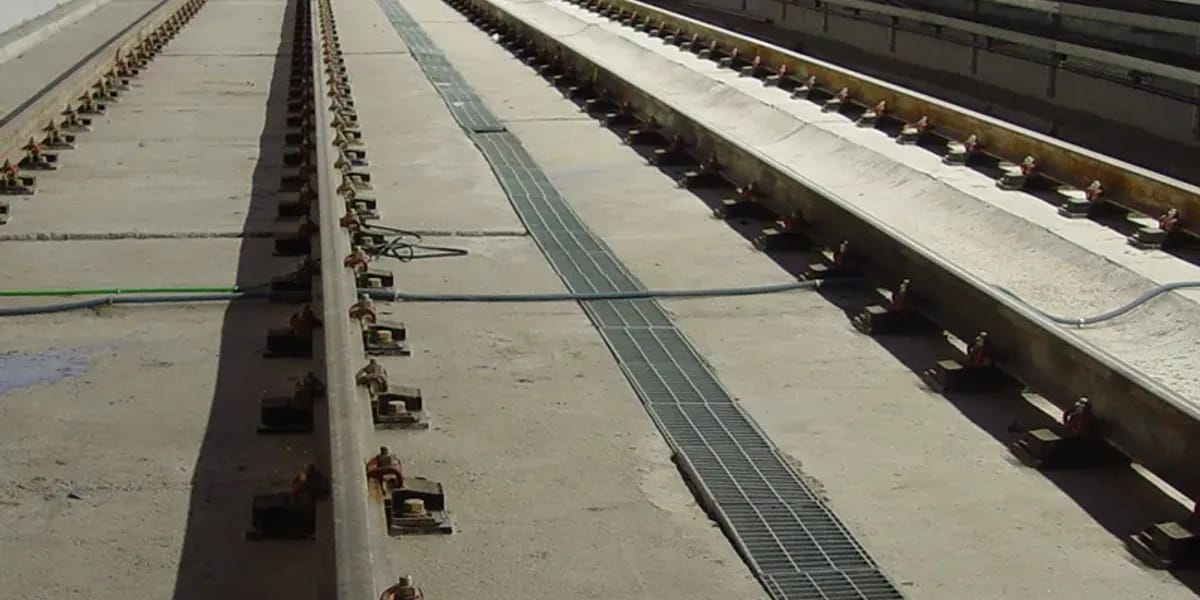
Bonded baseplates
Pandrol Bonded Baseplates support rail corrugation control and help reduce vibration caused by the dynamic forces of passing trains. This versatile fastening solution suits slab track, concrete sleepers, steel bridges, ballasted track, turnouts and crossings.
What are Bonded baseplates products and how do they work?
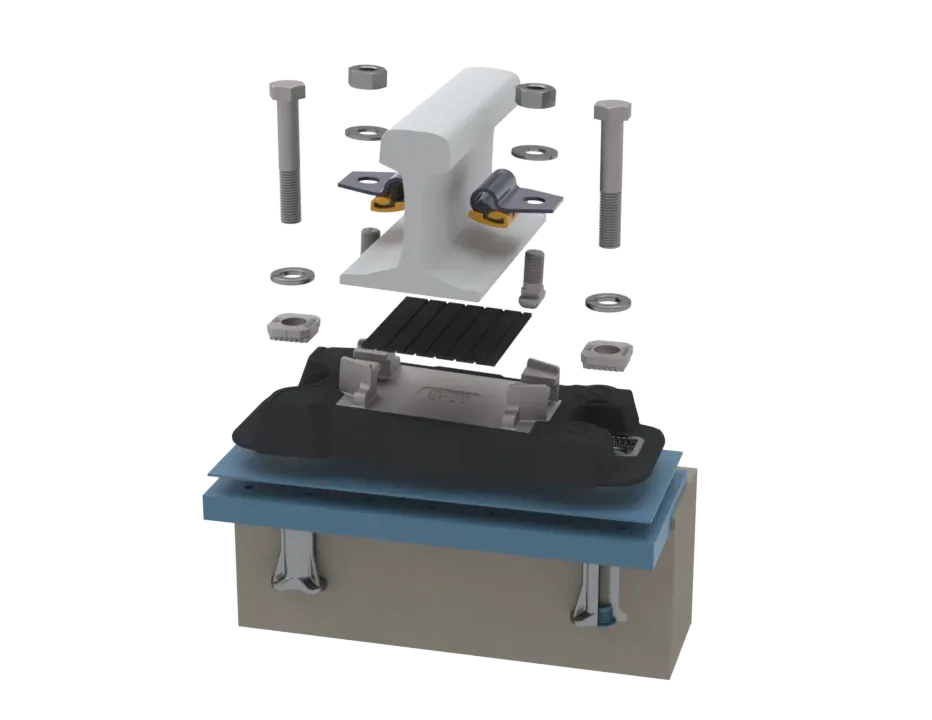
Bonded Baseplates deliver both vertical and lateral stiffness through two independent cast baseplates. We factory-assemble each system as a single unit, bonding the top and bottom plates together with vulcanised rubber. This gives you high electrical resistance, rail corrugation control, a long electrical leakage path, and lateral resilience.
The same versatile system works across standard track and turnouts. Choose the standard model for running track, or a customised version for switching zones, so one fastening system covers your whole network.
Installs using either top-down or bottom-up construction methods.
Provides exceptional vibration mitigation for track and surrounding structures.
Meets EN Standard electrical insulation requirements, tested at several times above the minimum.
Product benefits
Vibration Isolation
Baseplate vibration damping keeps wheel-generated vibration and noise low, thanks to the system's low stiffness. Rather than transferring dynamic loads into the ground, the baseplate distributes them along the supports, protecting your track and reducing disturbance to nearby structures.
High Corrosion Resistance
A rubber coating protects the baseplate from atmospheric corrosion and everyday wear, acting as a durable barrier against the elements. This protective layer extends the lifespan of the baseplate, keeping performance consistent even in demanding environments.
Simple Installation
Install Bonded Baseplates quickly and without specialist equipment. A single person can fit or replace the system, or any of its components without disrupting your maintenance schedule, using only hand tools. Despite this simplicity, the solution delivers strong track elasticity and reduced rail stress.
Overview
Reduces ground borne noise and vibration on bridges and viaducts where space for the fastening system is limited. This bonded, vulcanised-rubber baseplate delivers high electrical resistance and strong corrosion protection in low toe load or zero longitudinal restraint configurations.
Downloads
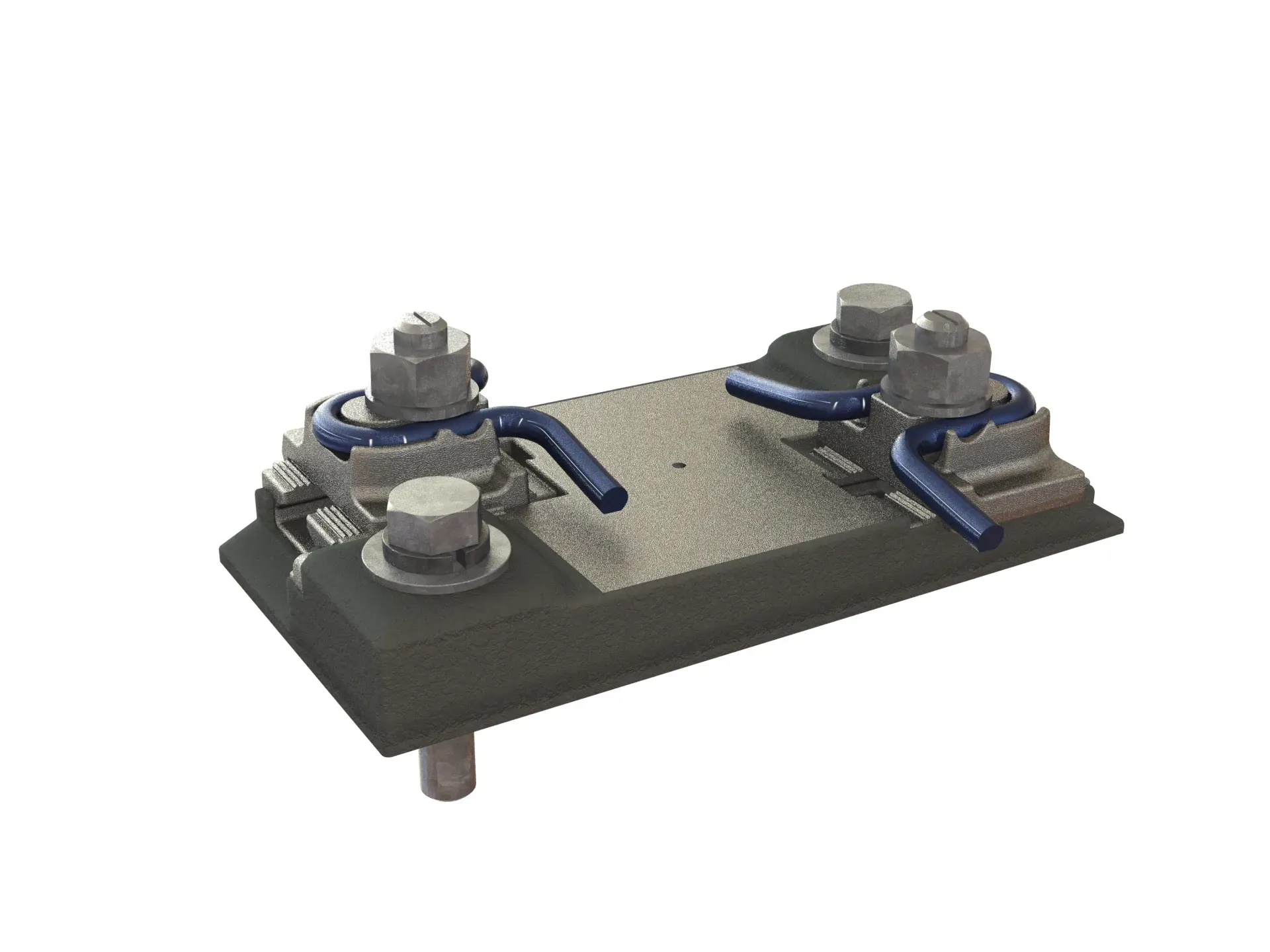
Overview
Can reduce ground-borne vibration on standard track and turnouts, with adjustable insulators that fit a wide range of rail sizes. This bonded, vulcanised-rubber baseplate is available with various threaded fastenings, offering high electrical resistance and a generous lateral adjustment of plus or minus 15mm.
Downloads
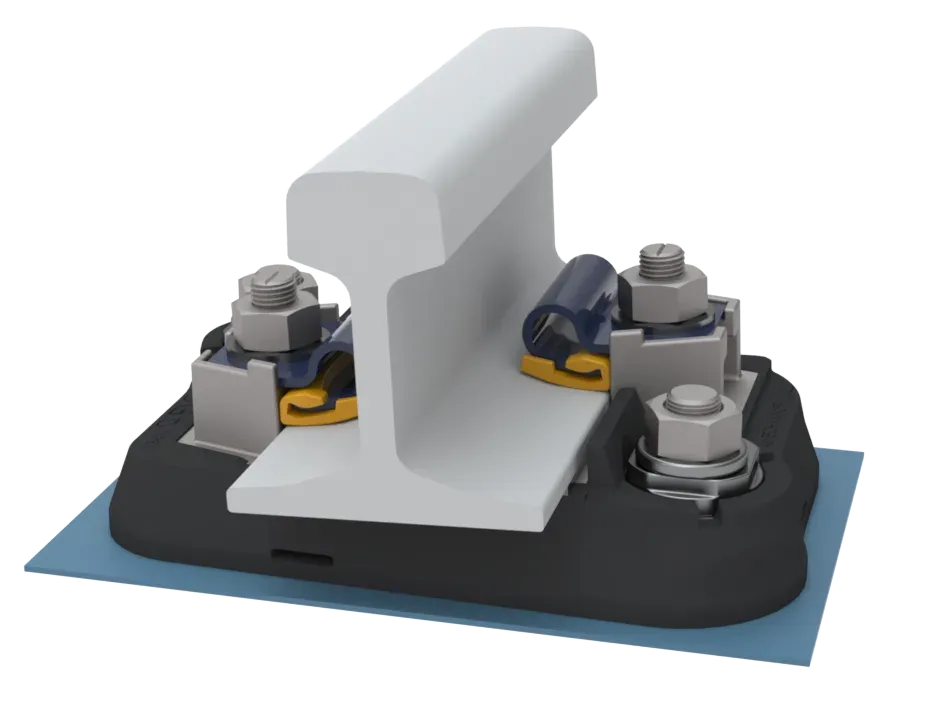
Overview
Purpose-built for high-speed lines, but equally suited to metro, standard track and turnouts. This bonded, rubber baseplate is available with threaded fastenersin two or four-hole footprints, delivering high electrical resistance for new build, renewal or retrofit projects.
Downloads
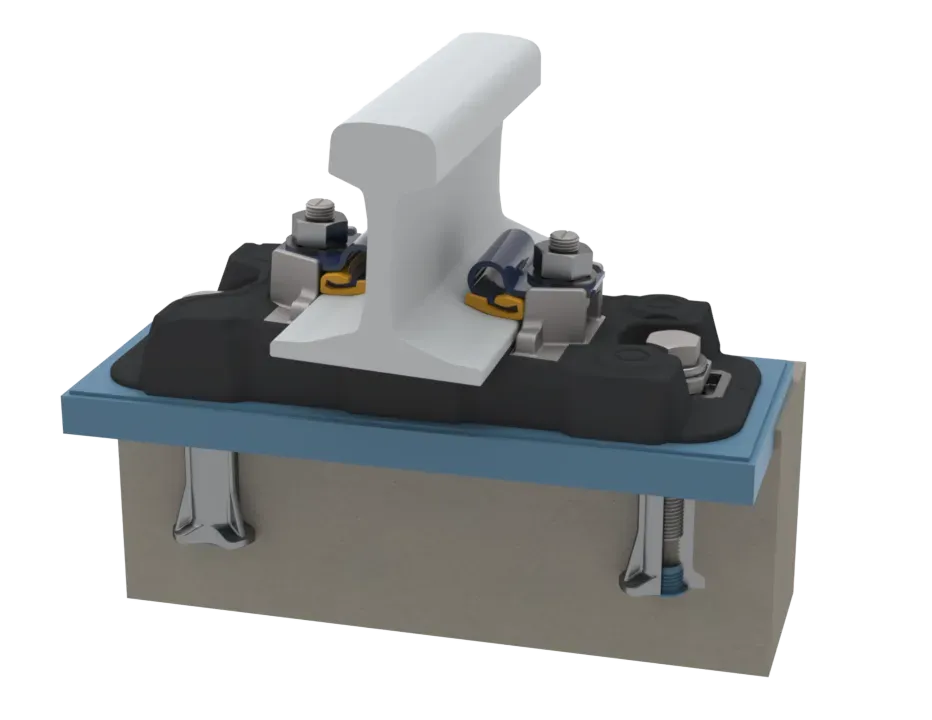
Overview
The standard Bonded Baseplate is designed for running track, including slab track, concrete sleepers, ballasted track and steel bridges. It delivers the same vertical and lateral stiffness as the wider range, and works with all mayor fastenings, so you can match it to your existing specification without changing the base system.
Downloads
Overview
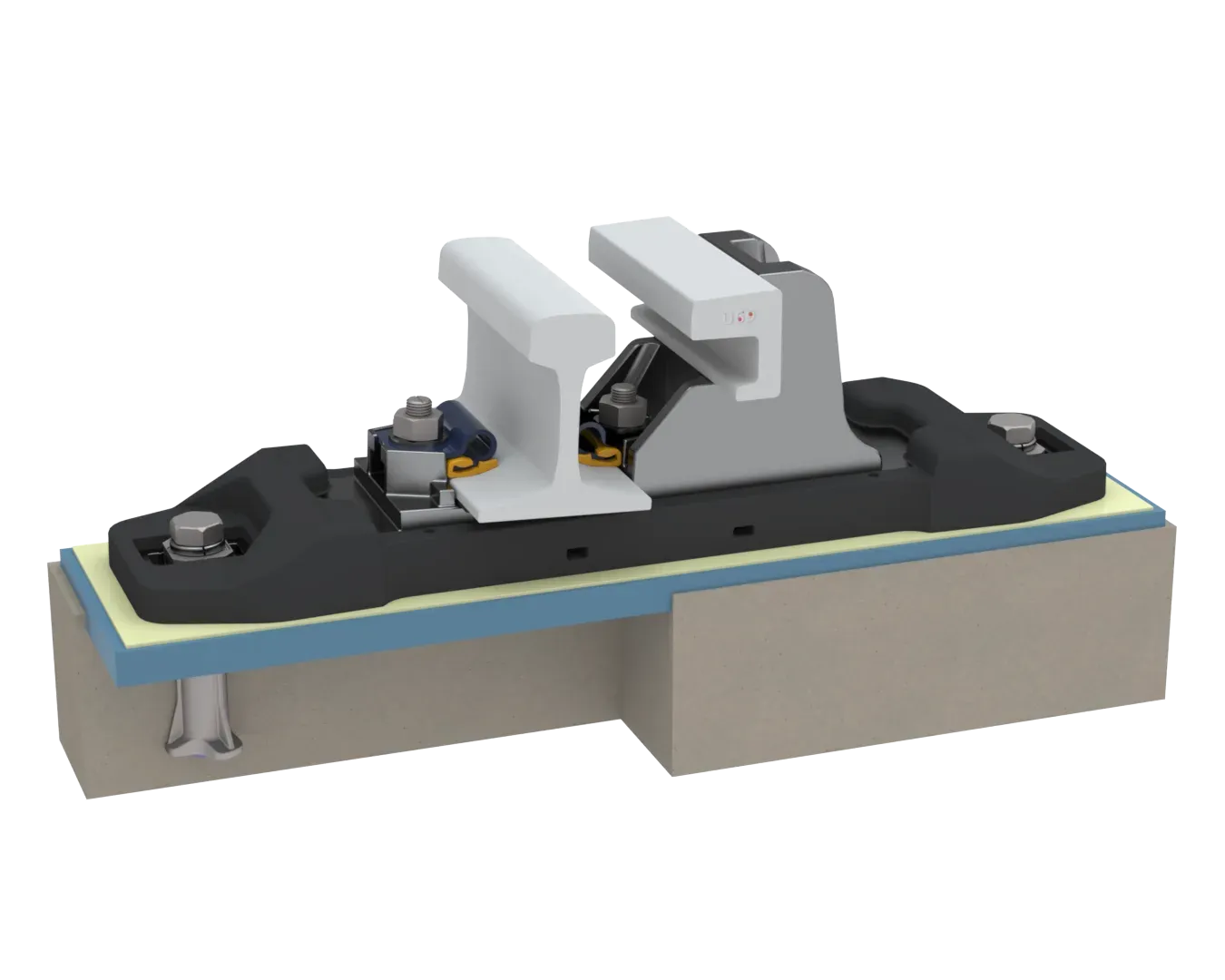
Choose a customised Bonded Baseplate turnout design for switching zones, available in a range of baseplate lengths to suit your turnout and crossing layout. It maintains the same electrical insulation and vibration mitigation performance as the standard model, so you don't compromise on protection in these more complex sections of track.
Downloads
No downloads available yet.
Related products
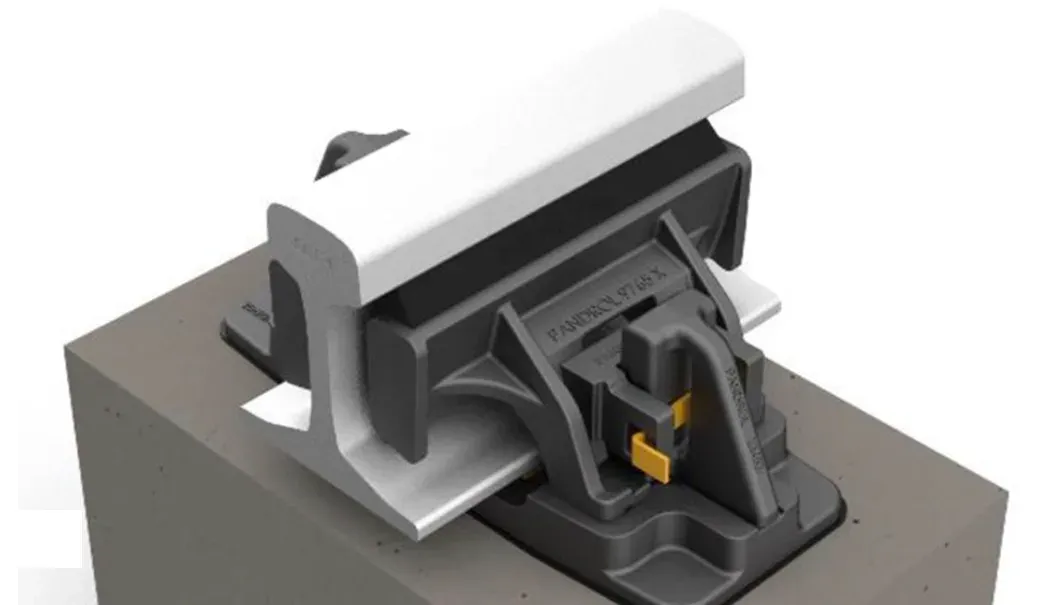
Below are other Pandrol products and equipment that can be integrated with this product. These complementary items can be used alongside this product, or are required for use with this product, or enhance the use of this product.
Discuss your Fastening Systems project with our team.
Did you know?
There are more Pandrol clips in service than there are people in Europe. Over three-times the amount to be precise. We have 3 billion clips in use and Europe has a population of around 750 million.